The Tel Aviv Buying Guide for International Buyers
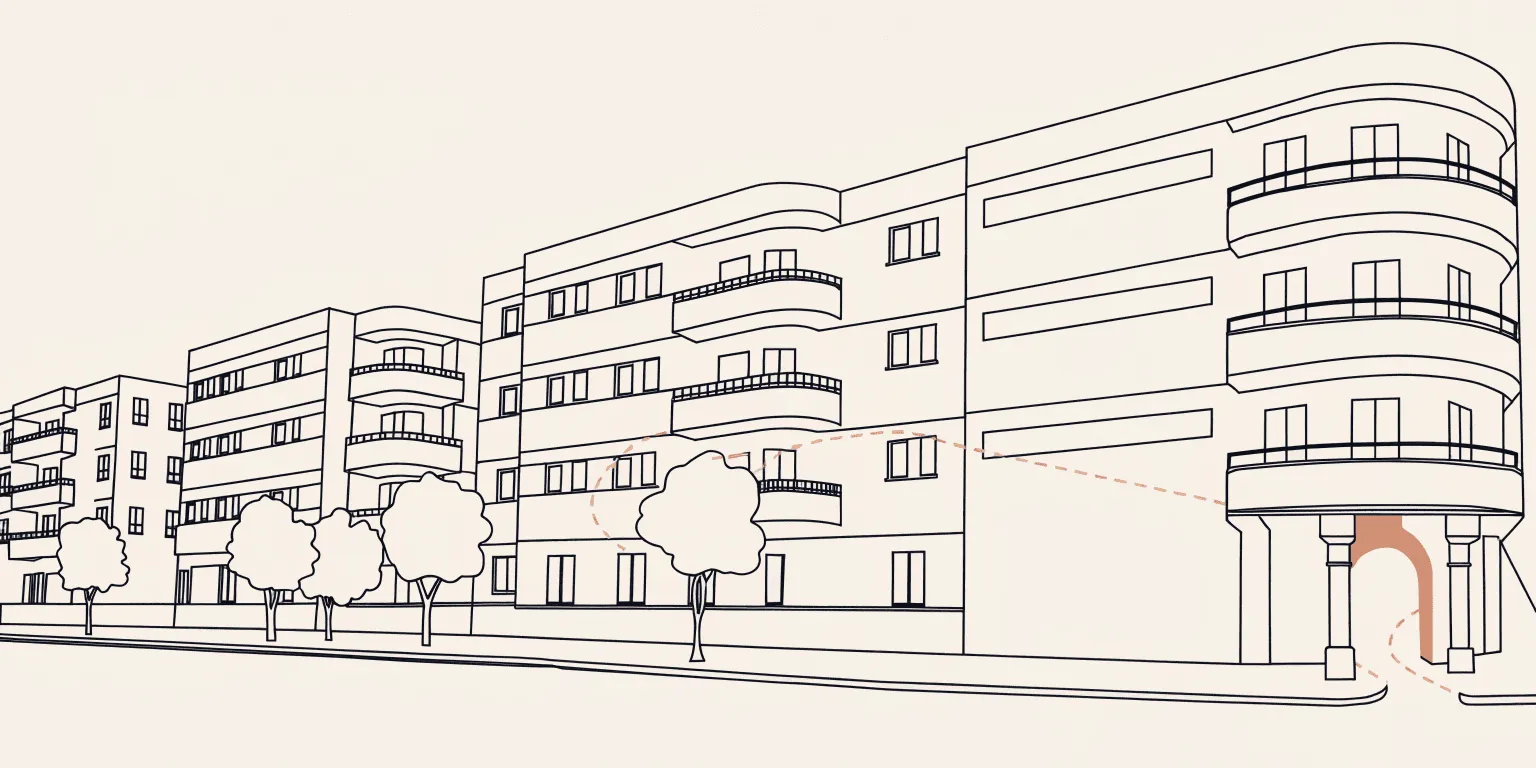
This buying guide is the English-language path for an international buyer of a Tel Aviv apartment: eligibility, purchase tax (mas rechisha), non-resident mortgages, the offer-to-Tabu process, professional fees, and rental-income tax. Start with the flagship foreigner guide; UK and US buyers have origin pages in their own currency.
New tracked listings this week are on the weekly page (neighborhood / rooms / price-size bands). The Monday sample with exact asking prices is on the subscribe page.
Get the Tel Aviv listings newsletter
New Tel Aviv listings, asking prices and direct links — one weekly newsletter in English.
Confirm your email to join. Unsubscribe anytime. Privacy policy.
Start here
- Buying Property in Israel as a Foreigner: The 2026 Guide The flagship guide — eligibility, purchase tax, non-resident mortgages, the process, and the all-in landed cost.
- My Tel Aviv Buyer Workspace Record what you want, compare up to five apartments you enter, and estimate upfront and monthly costs with the scenario planner. The listings newsletter stays a separate form.
- Free neighborhood research pack Compare dated neighborhood evidence and print a two-area worksheet. No email required.
- Where to buy: budget, space and building features A historical shortlist combining apartment asking budgets, size, room mix and recorded building features, with separate samples. No best-neighborhood or community labels.
- Buyer scenario planner: cash to close, mortgage and holding costs Compare two purchase scenarios: cash required at closing, fixed-rate amortization, balance at your horizon, labelled cost assumptions and rate/price sensitivity. Works without JavaScript.
- Can foreigners buy property in Israel? The eligibility rule: who can buy, the Tabu title, and the leasehold exception.
- Purchase tax in Israel for foreign buyers Mas rechisha brackets for non-residents, with a resident-vs-non-resident comparison and worked examples.
- Mortgages for non-residents The ~50% LTV ceiling, lender criteria, and the heter iska structure.
- How Israeli mortgages work The three tracks — fixed-unlinked, prime/variable, and CPI-linked — the Bank of Israel mix rules, and a worked payment example.
- Transferring money to Israel Whether you need an Israeli bank account, the lawyer’s trust-account route, the automatic bank reports to IMPA, and the source-of-funds file.
- The buying process, step by step The full transaction from offer to Tabu registration, including remote purchase.
- Lawyers, fees and costs What the lawyer and agent do, and the professional fees on a foreign purchase.
- Leasehold vs freehold in Israel Tabu freehold vs Israel Land Authority leasehold, and what it means for a foreign buyer.
- TAMA 38 and urban renewal for buyers What a pending TAMA 38 / pinui-binui project means for price, risk, and timeline.
- Rent first or buy after aliyah? The rent-vs-buy decision for new olim, with a worked cost comparison from our own rent and asking data.
- Oleh purchase-tax benefit The reduced new-immigrant purchase-tax brackets, the aliyah eligibility window, and a worked oleh-vs-resident-vs-non-resident comparison.
- Tax on rental income in Israel The three tracks a foreign owner can elect — the monthly exemption, the flat 10% of gross, and the ordinary ladder — and what Tel Aviv rents do to the exemption.
- Capital gains tax in Israel (mas shevach) The 25% on real gain, the pre-2014 linear relief, the ₪5,008,000 exemption ceiling against our own neighborhood prices, the certificate a non-resident must produce, and the betterment levy.
- Arnona in Tel Aviv (municipal tax) The 2026 residential tariff, who the municipality bills, what the yearly bill is on our implied median tracked apartment, and the 50% oleh discount Tel Aviv actually gives.
- Va'ad bayit in Tel Aviv (building committee) The Land Law owner-pays rule, how the share is calculated, and why we publish no citywide monthly figure — plus what our tracked panel can say about buildings with a lift.
- Home insurance in Tel Aviv The official standard apartment policy: earthquake is on unless waived, war and terrorist attacks are excluded, and we publish no citywide premium — there is no official tariff.
- Appraisal (shamaut) in Tel Aviv The licensed opinion of value: only a registered appraiser may charge for one, the agent cannot also be the appraiser, and we publish no citywide fee — there is no official tariff.
- Mortgage broker for foreign buyers The person who shops a housing-loan file across banks: the title is not reserved, land brokerage and securities advice are, and we publish no citywide fee — there is no official tariff.
- Tabu (land registry) in Israel What the Land Registry is, how a foreign buyer pulls a certified extract (nesach), the official 2026 extract fee, and why a listing is not title.
- Zichron devarim (memorandum) in Israel The written undertaking Land Law s.8 already requires: the sale finishes only at Tabu, a signed memo that is definite and intended can bind you first, and we publish no typical deposit.
- Due diligence on an Israeli apartment Two jobs: the lawyer’s title and planning file, and an optional physical survey. The Sale of Apartments Law’s defect clocks bind a builder-seller, not a typical second-hand owner — and we publish no citywide inspection fee.
- Inheritance for foreign owners No Israeli estate duty on a death after 31 March 1981; heirs still need an inheritance order or probate of will. The official 2026 registrar application fee is ₪597 — not a lawyer’s bill.
- Power of attorney for foreign buyers Close remotely with a yipui koach. An Israeli-signed land power of attorney needs a notary; one signed abroad follows the law of that place. The official 2026 first-signature notary fee is ₪197 plus VAT — not a lawyer’s bill.
- Purchase contract and deposit in Israel A Sale Law sale of land. No official second-hand deposit percent. A builder-seller may not take more than 7% of the price unless the 1974 law’s listed security is given. The official 2026 Tabu warning-note fee is ₪188.
- Handover vs Tabu: keys are possession Sale Law delivery is putting the flat at your disposal. That is possession, not title. A builder-seller late after a one-month grace pays a statutory rent-multiple. No invented days-to-keys figure.
- No golden visa: buying is not residency A Tabu entry is title, not a visa. Israel has no property-for-residency programme. Official 2026 B/2 application fee ₪105 — not a lawyer’s immigration bill.
- Do I need an Israeli lawyer? Dual representation A buyer acting in person is not required by statute to hire a lawyer. Chamber Law s.20 reserves paid Tabu representation and drafting for another. Dual representation is ethics 14(b)’s default ban, with a written-consent carve-out in 14(d). No official citywide lawyer bill.
- Zakaut mortgage for olim The Housing Loans Law directed slice, not a 3% mortgage on the apartment. Eligibility is housing-lacking plus Ministry rules; the 3% cell is a cap at 599 points; the Act-text shekel band is a slice of a Tel Aviv sticker.
- Buy before or after aliyah? Two clocks: the oleh purchase-tax window starts about one year before aliyah; Zakaut is a separate housing-lacking loan, not a pre-aliyah default. No invented always-after rule.
- Tax residency / center of life You can buy before aliyah. A Tabu entry does not make you a tax resident. Income Tax Ordinance s.1 is a center-of-life test with rebuttable 183-day and 30-plus-425-day presumptions. The ten-year holiday is foreign-source only.
- VAT on a new-build in Israel A developer’s new-build is a VAT transaction at the official 18% rate from 1 January 2025. Do not add that 18% on top of a VAT-inclusive sticker. A typical private second-hand sale is not that transaction.
- New-build vs second-hand in Tel Aviv A developer new-build and a private resale are different statute stacks: VAT-inclusive dealer sticker, 7% unsecured builder take, CBS madad on the unpaid balance, and 1973 late-delivery / defect clocks. A typical private resale is none of those cells.
- Is a Tel Aviv apartment a good investment? Not a verdict: citywide gross yield from two asking panels, the CBS national dwellings path that has cooled, three rental-income tax tracks, and a 50% non-resident cash-to-close. We invent no net yield and no future appreciation.
- Pinui-binui in Israel Not TAMA 38 and not an 80% vote. The 2006 law’s qualified majority is two-thirds of the cluster, three-fifths of each building, and more than half the common property. A finished replacement unit is a new-build. We invent no citywide share.
- Real-estate broker commission in Israel A metavech is a reserved title. There is no official 2% commission. Section 9: no fee without a signed written invitation that states the agreed amount or rate and whether VAT is included. We invent no citywide bill.
- Betterment levy in Israel (heitel hashbacha) A municipal levy, not mas shevach. Default rate 50% of planning-driven betterment; 25% on residential land after a pinui-binui plan from 1 May 2022. The owner pays it when rights are realized. We invent no citywide bill.
- Form 4 / teudat gmar (occupancy certificate) English pages call the occupancy paper Form 4. The Planning and Building Law names an approving-authority certificate; teudat gmar is that certificate after the building is fit for use. Electricity, water and telephone may not connect a building without it. We invent no municipal fee.
- Buying remotely from abroad There is no fly-in statute. A lawyer-led remote close uses a power of attorney (yipui koach). An Israeli-signed land power of attorney needs a notary; one signed abroad follows the law of that place. Title still finishes at Tabu. We invent no apostille fee.
- Sale Law 5728-1968 vs Contracts s.39: accepted manner and good faith Accepted manner and good faith in Israel is Contracts Law section 39 and Sale Law 5728-1968 section 6 — the 1968 performance pair, not a shekel tariff. Good faith in negotiations is Contracts Law section 12. First to register is Land Law s.9. We invent no cooling-off clock.
- Escrow and trust accounts in Israel Israel has no third-party escrow industry as standard. The stack is the lawyer’s trust account (ethics rule 39) and a Land Law s.126 warning note. Sale Law defaults to pay-on-delivery. Official 2026 warning-note cell ₪188. We invent no escrow premium.
- Cooling-off / cancel an apartment purchase A typical Tel Aviv apartment sale has no statutory 14-day cooling-off. The Consumer Protection Law’s 14-day cells are hawking, distance selling, and timeshare units. The 2010 schedule does not print an apartment. We invent no cancellation clock.
- Protected tenant vs ordinary lease A typical Tel Aviv asking-rent listing is not a protected tenancy. The 1972 law is a closed class after 20 August 1968 unless later let with key money. An ordinary 1971 lease ends at the agreed term. We invent no citywide share.
- Short-term rental / Airbnb in Tel Aviv A Tabu purchase is not a short-term rental license. The national lodging-license cell for vacation units with services starts above four units. Hotel, pension and hostel are a different cell. Nightly letting is taxed as business income. We invent no citywide Airbnb ban.
- Joint ownership / buying with a spouse Marriage does not put both spouses on the Tabu extract. The 1973 law says celebrating or living in a marriage does not, by itself, give one spouse rights in the other’s assets. Co-ownership is undivided shares on the register. We invent no citywide joint-title share.
- British expats Israel property (buying an apartment from the UK) British expats Israel property means buying an apartment from the UK on privately owned Tabu title. GBP framing, UK hours vs Israeli banks and Tabu, remote close, and mas rechisha instead of SDLT.
- Buying property in Israel from the USA USD framing, US time zones vs Israeli offices, remote close, and cross-border tax questions for counsel.
Key terms
The Hebrew terms these guides rely on — Tabu, mas rechisha, heter iska, mamad and more — are defined in plain English in the Tel Aviv property glossary.
Questions
Can foreigners buy property in Israel?
Yes. Any foreign national can buy privately-owned Israeli property and hold registered title in the Tabu, with no visa, citizenship, or Law of Return requirement. The main exception is state leasehold land under the Israel Land Authority. Most central Tel Aviv apartments sit on transferable Tabu land. Buying does not itself grant a residence license or citizenship — that is a separate page.
What purchase tax do foreign buyers pay in Israel?
Non-residents pay purchase tax (mas rechisha) from the first shekel — 8 percent up to the published non-resident threshold and 10 percent above — with no resident-style exempt band. Israeli tax residency, not a passport, decides the schedule. Worked brackets live on the purchase-tax guide.
Can I buy a Tel Aviv apartment from the UK or the US without flying in?
Yes. A foreign buyer can close remotely by granting a power of attorney to an Israeli lawyer. The dedicated power-of-attorney page sets out Agency Law s.1 and the Notaries Law s.20 notary rule. UK and US origin pages reframe the same process in sterling or dollars. The step-by-step process page sets out the sequence.
Get the Tel Aviv listings newsletter
Discover newly published Tel Aviv listings, compare asking prices and explore the properties that interest you. Get the weekly roundup in English, straight to your inbox.
Confirm your email to join. Unsubscribe anytime. Privacy policy.